
Skip to Main Content

The Protein Shift: What Europeans Want From Meat, Poultry and Seafood

We asked consumers across the UK, France, Germany, Italy and Spain how they eat meat, poultry, seafood and plant-based proteins. Get the key findings in our free report preview.

Europeans still eat meat, but what they choose is shifting

Europeans haven’t given up meat, but the mix is shifting. Poultry and seafood are growing, red meat’s outlook has turned negative, quality matters more than volume, and plant-based is now part of everyday eating, especially for younger consumers.

This free 20-slide preview draws from our complete 59-slide report, The Protein Shift: Meat, Poultry & Seafood in Europe. It covers red meat, poultry, seafood, charcuterie, plant-based and restaurants across the five biggest European markets and four generations, and what the findings mean for brands, suppliers and operators.

What consumers told us

  • 82% eat meat: 59% as meat eaters and 23% as flexitarians
  • +21 and +18: the net growth in poultry and seafood eaten at home over the past 12 months
  • –13: the net outlook for red meat next year, the only protein expected to fall
  • 71% eat plant-based proteins or alternatives at least occasionally, and 56% of Gen Z eat them weekly at home
  • 75% would accept a smaller meat or fish portion with more generous sides

Built for the European food and drink supply chain

  • Meat, poultry and seafood producers: see which proteins are growing, which are under pressure and how quality cues shape choice, market by market.
  • Plant-based and alternative protein brands: understand who eats plant-based today, and how wary consumers are of products that mimic meat.
  • Distributors and wholesalers: see which proteins and formats to build ranges around, from beef and chicken to charcuterie and sushi.
  • Chains and operators: learn what diners want from menus, from smaller portions with generous sides to premium and global formats.
Frequently Asked Questions

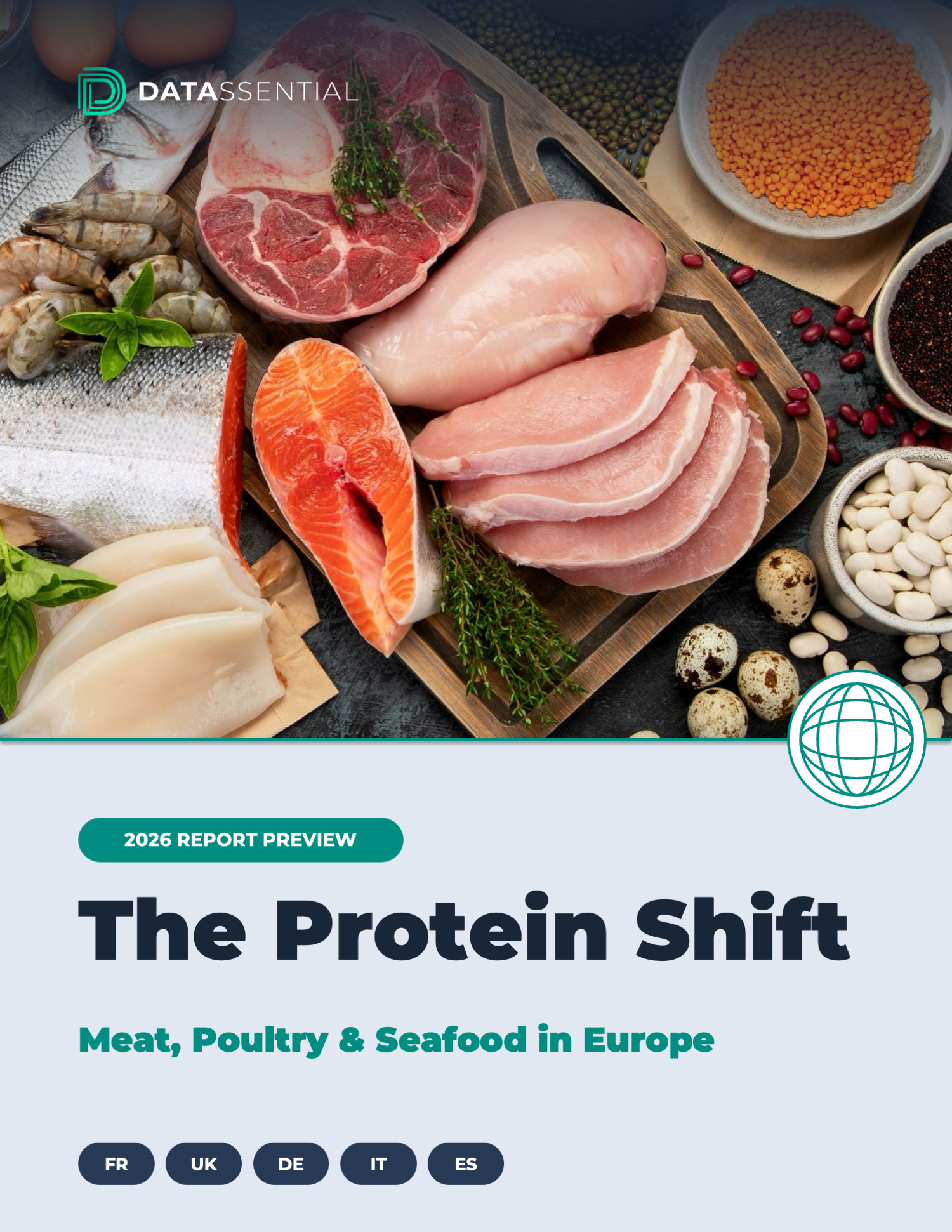
Protein_Shift_Preview_Cover_Vertical
  • What is The Protein Shift report?

    The Protein Shift: Meat, Poultry & Seafood in Europe is a Datassential consumer survey of 2,512 adults in France, the UK, Germany, Italy and Spain. It covers how Europeans eat red meat, poultry, seafood, charcuterie and plant-based proteins, how habits differ by generation, and what they want from restaurants.

  • What topics does the report preview cover?

    The free preview samples every section of the full report: who eats what, how protein eating is changing, red meat, poultry, seafood, charcuterie, plant-based, what matters when choosing protein, and what diners want from restaurants.

  • How many people in Europe eat meat?

    82% of the Europeans surveyed eat meat: 59% describe themselves as meat eaters and 23% as flexitarians. Quality-conscious eaters (35%) are the largest group, just ahead of regular eaters (33%).

  • Are Europeans eating less red meat?

    Not across the board. Looking ahead, red meat is the only protein Europeans expect to fall (net –13), while poultry (+21) and seafood (+18) grew at home over the past 12 months.

  • What matters most when Europeans buy meat, poultry or seafood?

    Freshness and quality (85%), taste and flavour (84%) and price or value for money (80%) rank first. Animal welfare, origin and labels each matter to around 60% of shoppers

  • Are Europeans open to plant-based and meat alternatives?

    Mostly yes: 71% eat plant-based proteins or alternatives at least occasionally. However, 54% say they are suspicious of products that mimic meat, so positioning matters.

  • How do Gen Z and Boomers differ in how they eat protein?

    34% of Gen Z could imagine cutting animal protein out entirely, twice the Boomer rate of 17%. Gen Z is also ahead on plant-based: 56% eat it weekly at home, against 22% of Boomers.

  • Is the report free?

    Yes. The report preview is free to download. The full Protein Shift report, with 59 slides covering every protein and detailed results by market and generation, is available through Datassential. Get in touch to request access.