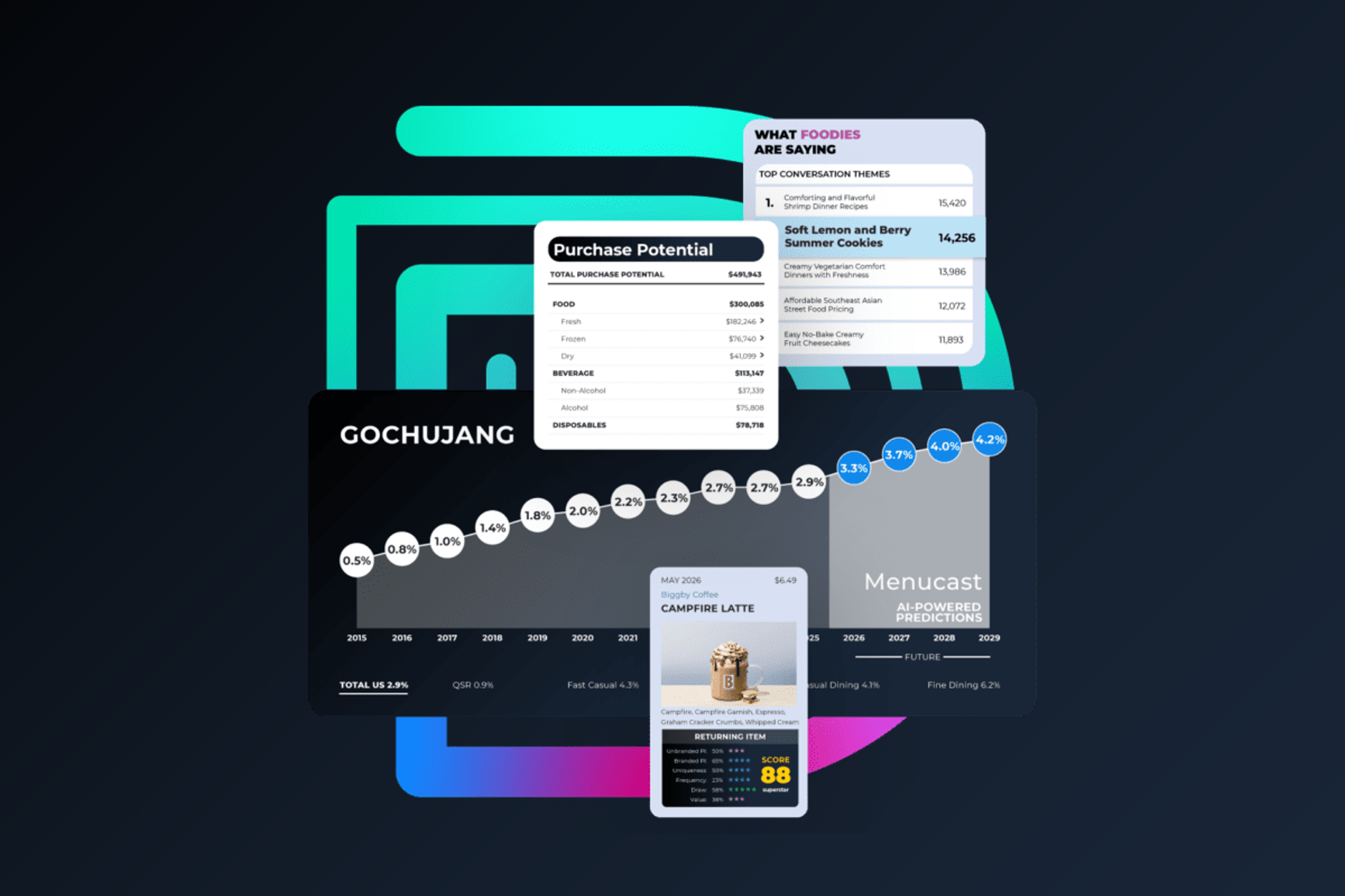
When Acxion Foodservice saw AI coming, they didn’t wait. They built something competitors couldn’t easily replicate: insight-driven AI tools grounded in real foodservice data – with Datassential at the foundation.

more data sources reviewed in the same research time

menu concepts annually supported with AI-assisted scoring

built on proprietary AI and Datassential intelligence
Acxion Foodservice is a trusted partner to foodservice manufacturers seeking smarter ways to grow.
The company brings together sales expertise, culinary innovation, data‑driven insights, and modern marketing capabilities to help clients reach operators more effectively and convert demand into measurable results.
As AI tools began flooding the market, Rachel Royster, Director of Strategic Planning at Acxion Foodservice, saw both an opportunity and a risk. Her team could use AI to work faster and smarter, but only if it was drawing from reliable, validated data. Generic AI tools pulling from the open web were producing outputs that were outdated, unsourced, or simply wrong. For a team that stakes its credibility on evidence-backed storytelling, that wasn’t an option.
At the same time, traditionally manual processes like concept scoring, operator targeting, and trend-led narrative development were time-intensive and limited by how much data a single person could reasonably review. Rachel needed a way to scale insight without sacrificing quality.
Rather than adopting off-the-shelf AI tools, Rachel built proprietary ones – with Datassential intelligence loaded in as the foundational data layer. Instead of asking AI to go find information, her team feeds it Datassential’s curated, validated industry insights first. The result is a set of tools that reason based on verified, expert-vetted data, not guesswork.
“The sweet spot with AI is how we can use content from Datassential to make AI stronger. It starts at a foundation of real, factual data – not AI slop, not a blog someone wrote ten years ago.”
– Rachel Royster, Director, Strategic Planning, Acxion Foodservice
Acxion Foodservice may be a baby in the industry at just 2½ years old, but our experience goes back much further. Formed in 2024 through the combination of foodservice brokers KeyImpact and Waypoint and the marketing and culinary agencies Marlin and CSSI, Acxion brings together decades of relationships, insights, and industry know-how.
Menu concept scoring
AI analyzes Datassential reports to identify trend relevance, which factors into a score Acxion uses to rank the product concepts. This allows clients to narrow down concept sets to the most viable candidates. Narrowing 50 concepts to 20, for example, offers average cost savings of over $15,000.
Operator targeting
AI combines Datassential menu data, LTO tracking, and chain growth trajectory with Acxion’s back-of-house knowledge to generate smart, prioritized operator target lists for manufacturer clients.
Culinary and data collaboration
Insights from Datassential brief the culinary team before they begin concept development, ensuring that chef creativity is focused on opportunities that data has already validated.
Before integrating AI into her research workflow, Rachel might draw on 3 or 4 data sources when building a client brief or market analysis. Today, she pulls from upward of 30 in the same timeframe – without doing more work. Datassential sits at the top of that stack, serving as the primary and most trusted source she builds every story from.
A sandwich chain client needed to narrow down a field of 60 product concepts before committing to expensive consumer testing. Rachel’s team ran them through the AI scoring tool to assess each concept against consumer trends, flavor profile data, and segment fit from Datassential, surfacing which directions were worth pursuing and which weren’t. Thanks to the AI-powered tool, the chain narrowed 60 product concepts to 30 finalists. What would have required a full round of consumer research was reduced to a fast, data-informed first pass.
Plenty of agencies are using AI. Far fewer are doing it with a validated, industry-specific data foundation underneath. Rachel is explicit about why that distinction matters: when you walk into a client meeting and cite Datassential, the credibility of the recommendation is immediately higher than if the same insight came from an unknown source – or, worse, from an AI model that hallucinated it.
Rachel is clear-eyed about what AI can and can’t do. When her culinary team ran a side-by-side test of AI-generated recipes versus chef-created ones, the difference was immediately apparent. While the AI recipes were satisfactory, the chef recipes were distinctive, better balanced, and tailored to specific consumer needs in a way that no prompt could replicate.
The AI isn’t meant to replace culinary creativity and expertise – it’s meant to give chefs, culinary directors, and R&D teams an easily accessible, data-backed starting point. The AI informs. The humans create.