 EN | English UK
 DE | Deutsch
 ES | Español
 FR | Français
 IT | Italiano
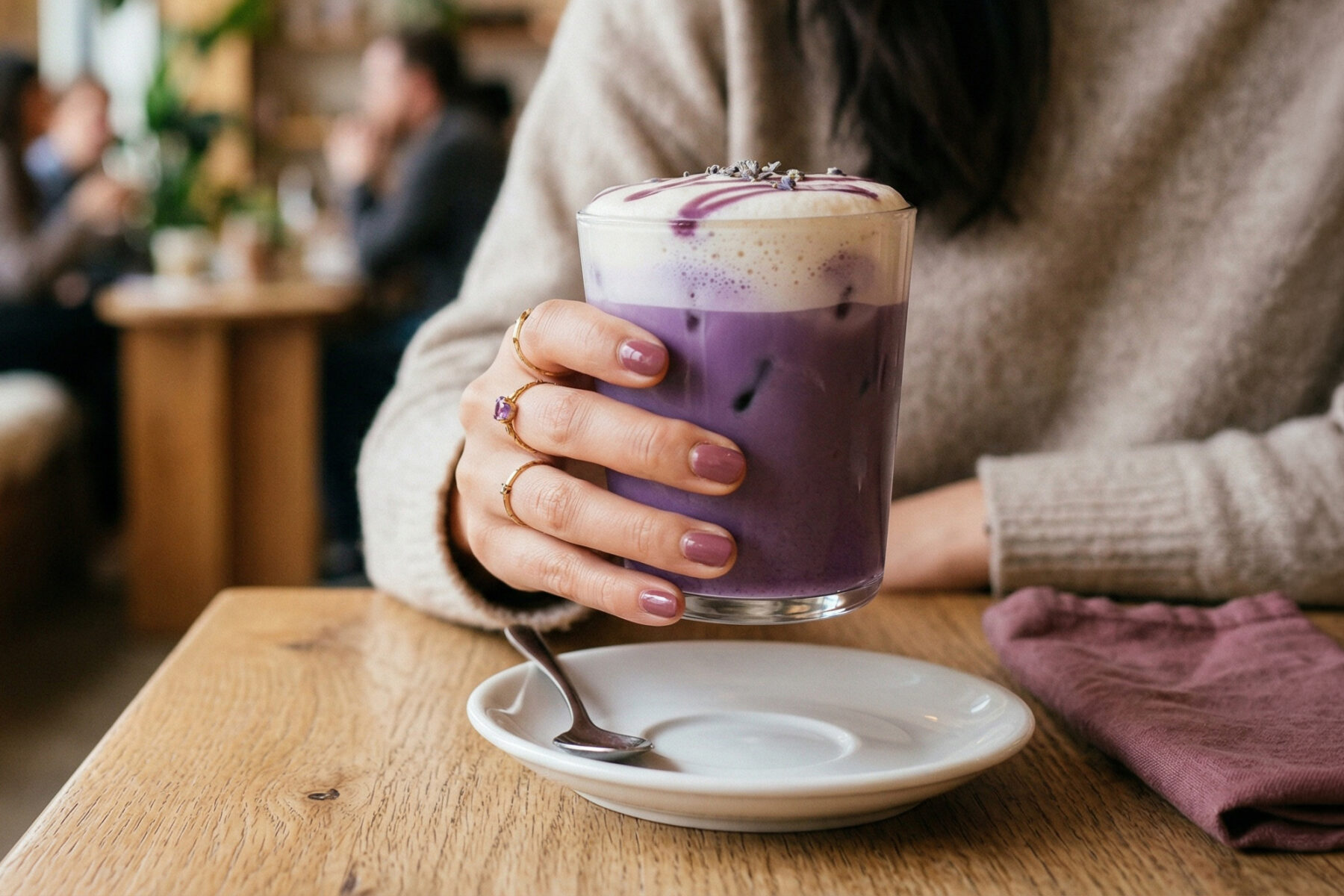
Bright purple, subtly sweet, and rooted in Filipino tradition, ube is quickly moving from niche ingredient to mainstream menu standout. But while its visual appeal may be what first grabs attention, its staying power comes from something deeper — it checks multiple boxes for today’s consumer: global, nostalgic, and highly versatile.
So what’s behind ube’s rise, and where does it go from here? Datassential trend experts
A flavor rooted in tradition continues gaining traction in the U.S.
Ube (pronounced oo-beh) is a purple yam commonly used in Filipino cuisine, especially in desserts like ice cream, cakes, and jams. Its flavor is often described as lightly sweet, nutty, and vanilla-like, making it distinct but approachable.
While ube has long been a staple in Filipino food culture, it’s been gaining traction in the U.S. over recent years as consumers continue to grow more and more open to globally inspired flavors that feel both new and familiar. In fact, according to Datassential, 58% of consumers say they find the flavors exciting when they eat globally-influenced foods.
Ube by the numbers
Datassential menu and consumer data underscores just how much traction ube is gaining:
- 1.3% of U.S. restaurant menus feature ube, and that number is projected to grow to 2.4% by 2029
- Menu Adoption Stage: Adoption
- +231% menu growth over the past four years
- 27% of consumers know what ube is (+4% versus 2 years ago)
- 13% have tried it (+2.6% versus 2 years ago)
- 9% say they like or love it (+1.2% versus 2 years ago)
More than just a color trend
In the Instagrammable society that we live in today, there is no doubt that the purple hue from ube has contributed to its success and stickiness, but the data suggests it’s more than just a visual moment.
In fact, consumer awareness of ube has grown significantly in a short period of time, rising from just 15% in 2021 to 27% today, meaning more than 1 in 4 consumers now know what it is. That kind of growth in familiarity helps cement ube as one of the more notable emerging ingredients in recent years.
Ube is resonating because it delivers on a combination of factors that are increasingly important to consumers:
- Familiar formats (ice cream, lattes, baked goods)
- New flavor experiences (global, slightly unexpected)
- Strong visual appeal (highly shareable, social-first)
- In other words, it removes hesitancy and lowers the barrier to trying something new.
Where ube is gaining traction
Ube is most commonly found in dessert and beverage applications, but its reach is expanding:
- Desserts: ice cream, pastries, cheesecakes, donuts
- Beverages: lattes, matcha, milk teas, smoothies
- Breakfast/brunch: pancakes, waffles, spreads
- Emerging formats: cocktails, soft serve, packaged snacks
This cross-category flexibility is a key reason it’s able to scale beyond niche menus.
Ube on restaurant menus
It’s hard to imagine a time when ube needed an explanation, but it wasn’t that long ago – it was on next to no menus in 2021 and in Inception on the Menu Adoption Cycle (MAC) when Datassential first highlighted it as a trend in 2017. Today, the Filipino purple yam (which has a mild flavor) is in Adoption on the MAC and being leveraged by major chains (it indexed higher on fall chain menus in 2025). It’s the poster child ingredient for creating social media-friendly items and has grown over 230% on menus over the past 4 years, according to Datassential menu data.
Examples AT RESTAURANTS include:
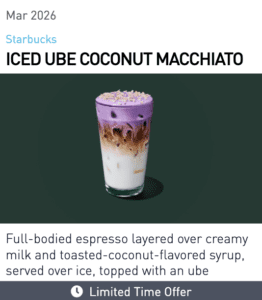
- Starbucks
Iced Ube Coconut Macchiato (espresso, milk, toasted coconut syrup, and ube coconut cold foam)
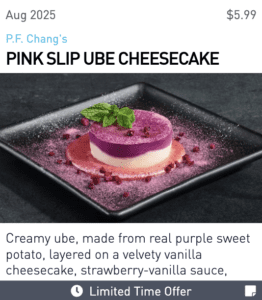
- P.F. Chang’s
Limited-time Pink Slip Ube Cheesecake featured purple sweet potato layered on a vanilla cheesecake topped with edible pink glitter, strawberry vanilla sauce, and freeze-dried dragon fruit
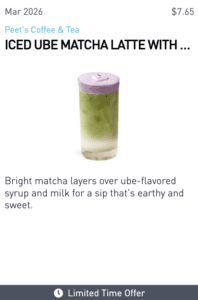
- Peet’s Coffee & Tea
Iced Ube Matcha Latte with Ube Dream Top (Bright matcha layers over ube-flavored syrup and milk for a sip that’s earthy and sweet).
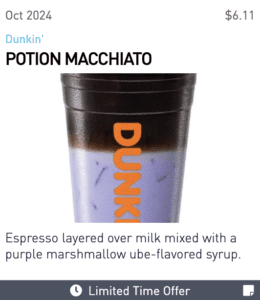
- Dunkin’
Potion Macchiato (Espresso layered over milk mixed with a purple marshmallow ube-flavored syrup)
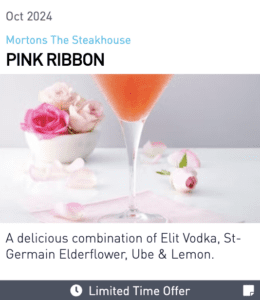
- Mortons The Steakhouse
Pink Ribbon, a delicious combination of Elit Vodka, St-Germain Elderflower, Ube & Lemon
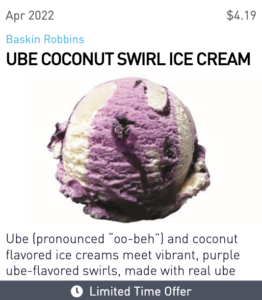
- Baskin Robbins
Ube Coconut Swirl Ice Cream (Ube and coconut flavored ice creams meet vibrant, purple ube-flavored swirls, made with real ube from the Philippines, for an authentic scoop with hints of sweet vanilla and nuttiness)
Why ube is resonating right now
It aligns with global exploration
Consumers are increasingly seeking out authentic, culturally rooted ingredients, and Filipino cuisine is gaining visibility in the U.S. Ube acts as an accessible entry point into that broader exploration.
It fits into comfort-driven indulgence
Even though ube is new to many, its flavor profile fits squarely within dessert-forward, comforting flavors, making it easy to adopt. You’ll find it will most commonly be paired with coconut, ice cream, cocktails, and fruit.
It’s built for discovery
In a social media-driven landscape, ube stands out. Its bold color and versatility make it ideal for menu items designed to be shared, photographed, and talked about.
It works across occasions
From a specialty latte to a dessert add-on, ube fits into both everyday treats and more indulgent occasions, giving it more staying power than a single-use trend.
What this trend really signals
Ube isn’t just about one ingredient; it reflects broader shifts in consumer behavior:
- A growing appetite for global flavors with cultural authenticity
- A preference for approachable experimentation
- Increased importance of visual and experiential dining
- Continued demand for indulgence with a twist
What comes next
As ube continues to grow, expect to see:
- More beverage innovation, especially in coffee, tea, and low-ABV drinks
- Increased expansion into new formats, including retail and packaged goods
- Broader adoption across restaurant types, including larger chains — we’ve already seen this adopted by major chains such as Baskin-Robbins and Starbucks in recent years
- Potential exploration into savory or cross-category applications
The bottom line
Ube’s rise isn’t just about aesthetics, it’s about alignment with where consumer preferences are headed.
It delivers:
- Familiarity without being boring
- Novelty without being intimidating
- Versatility across formats and occasions
And that combination puts it in a strong position to move from trend to staple.
Explore how Datassential helps operators track flavor adoption, menu white space, and what comes next — all in one place. Request a demo or ask for more information here.