 EN | English UK
 DE | Deutsch
 ES | Español
 FR | Français
 IT | Italiano
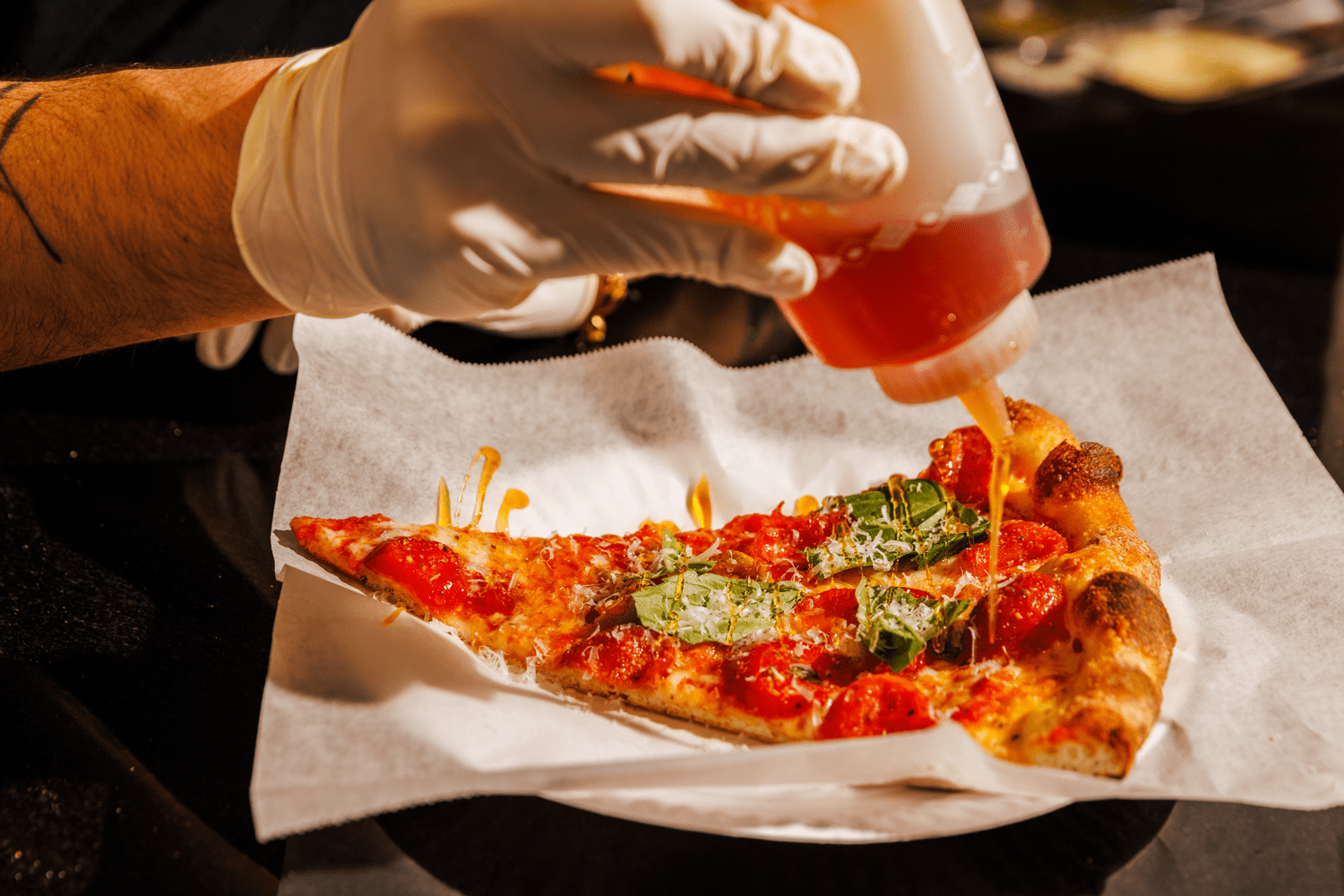
Hot honey is the condiment reshaping American flavor preferences by combining honey’s natural sweetness with the heat of chili peppers. Once a niche drizzle, it’s now firmly in the Proliferation stage of the Menu Adoption Cycle, appearing on 11.3% of all U.S. restaurant menus and posting nearly 230% growth over the past four years, according to Datassential.
That kind of growth doesn’t signal a fleeting trend; it signals a structural shift in how Americans want flavor: bold, balanced, and craveable.
What Is Hot Honey?
Hot honey is honey infused with chili peppers, often dried chiles or chili flakes, and sometimes with a small amount of vinegar for brightness. It’s used similarly to traditional honey but adds heat, making it a flexible sweet-spicy (“swicy”) condiment for both savory and sweet applications.
Datassential consumer preferences data shows:
- 75% of U.S. consumers are aware of hot honey
- 48% have tried it
- 39% say they love or like it
Where Did Hot Honey Come From?
Hot honey’s modern origin dates back to 2004, when college student Mike Kurtz encountered chili-infused honey while studying abroad in Brazil. Inspired by the pairing on pizza, he began experimenting with his own recipe back at UMass Amherst.
The real turning point came in 2010 at Paulie Gee’s pizzeria in Brooklyn, where Kurtz’s honey was drizzled over a soppressata pizza that became a cult favorite. That dish — and what would become Mike’s Hot Honey — helped launch hot honey from a kitchen experiment into a national condiment category.
How Hot Honey Sparked the ‘Swicy’ Movement
Hot honey was an early proof point that sweet and spicy don’t just coexist — they amplify each other. Heat from chiles activates pain and pleasure receptors on the tongue, while sweetness balances intensity, creating flavor without fatigue.
Datassential menu data shows sweet-spicy flavors surging across U.S. menus in recent years, and hot honey helped make global sweet-heat profiles — like Thai sweet chili, Korean gochujang, and Latin American chamoy — feel accessible and distinctly American.
Hot Honey by the Numbers
Datassential underscores just how prolific hot honey has become:
| Menu Penetration: 11.3% of U.S. restaurant menus |
| Menu Adoption Stage: Proliferation |
| Four-Year Menu Growth: +230% |
| Consumer Awareness: 75% |
| Tried It: 48% of consumers |
| Love or Like It: 39% overall |
| Love It or Like It Among Those Who Have Tried It: 73% |
Once consumers try hot honey, they are dramatically more likely to become fans — a critical insight for operators deciding whether the flavor is worth the menu space.
How Hot Honey Changed American Spice Culture
Hot honey didn’t just introduce a new condiment; it lowered the barrier to entry for heat. Datassential research shows rising spice tolerance, especially among Millennials and Gen Z, who grew up with global street food, viral recipes, and heat-forward flavor experimentation.
The result: spicy flavors feel less niche and more everyday, with sweet-heat combinations driving interest across snacks, sauces, beverages, and desserts.
What Is Hot Honey Used For?
One reason hot honey scaled so quickly is its versatility. Datassential scores it highly for both menu versatility and food versatility, signaling that it works across cuisines, dayparts, and formats.
Common applications include:
| Pizza (the original use case) |
| Fried chicken and wings |
| Biscuits, pancakes, and breakfast sandwiches |
| Cheese boards (especially goat cheese and brie) |
| Ice cream, doughnuts, and desserts |
| Cocktails and specialty coffee |
| Sushi and dipping sauces |
Hot Honey on Restaurant Menus
Hot honey now spans restaurant segments, from independents to major chains — a hallmark of a flavor that has crossed into the mainstream. Datassential menu tracking shows it appears most frequently at regional chains, where innovation often precedes national rollout.
Examples include:
| Dough Doughnuts (hot honey doughnuts) |
| Lou Malnati’s (hot honey pizza) |
| Dunkin’ (seasonal hot honey items) |
| Insomnia Cookies |
| KFC and Taco Bell sweet-spicy LTOs |
| Venue-specific concepts like Madison Square Garden’s Mike’s Hot Honey chicken stand |
Why Hot Honey Works (The Science)
Heat triggers endorphins; sweetness signals comfort. Together, they create a flavor experience that feels indulgent, exciting, and repeatable. As American consumers grow more comfortable with global flavor logic, sweet-spicy combinations feel intuitive rather than experimental.
Datassential social data also shows hot honey most often associated with indulgent, crave-forward foods — reinforcing its role as a flavor enhancer, not a novelty.
Is Hot Honey Just a Trend?
Datassential categorizes hot honey as firmly in the proliferation stage of the menu adoption cycle. That means it has moved well beyond trend status but still has a meaningful runway for growth.
While social media chatter has cooled — a common pattern as trends mature — menu presence, consumer trial, and affinity remain strong.
So, What Comes Next for Hot Honey?
According to Datassential, hot honey’s next phase of growth will come from menu diversification rather than simple expansion. Instead of appearing on more pizzas and chicken items, the flavor is poised to move deeper into breakfast, beverages, desserts, and cross-category sauces, while also acting as a gateway for the next generation of sweet-heat flavors.
With hot honey still on just 11.3% of menus and trial driving a significant lift in consumer affinity, the opportunity ahead isn’t about chasing a trend — it’s about scaling a proven flavor platform.
The Hot Honey Story, So Far
What started as a drizzle on pizza has become a defining flavor of modern American menus. With nearly 230% menu growth in four years and strong consumer affinity, according to Datassential, hot honey isn’t just changing what we eat — it’s changing how we think about flavor.
Explore how Datassential helps operators track flavor adoption, menu white space, and what comes next — all in one place. Request a demo or ask for more information here.