 EN | English UK
 DE | Deutsch
 ES | Español
 FR | Français
 IT | Italiano

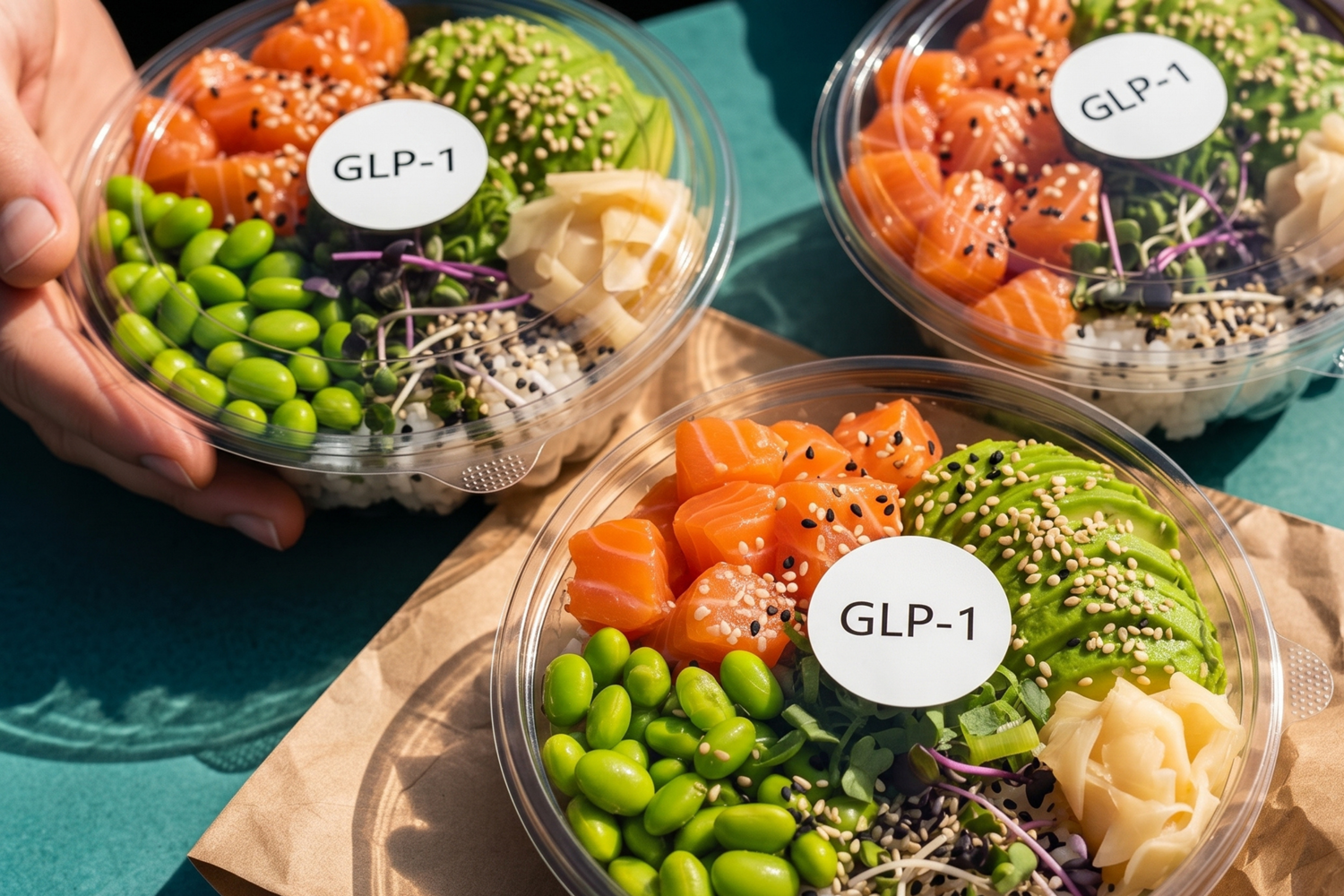
GLP-1 medications have moved from the doctor’s office to the dinner table, and the food and beverage industry is still working out what that means. Datassential’s new study, The GLP-1 Consumer Today, surveyed roughly fifteen-hundred U.S. consumers who currently, formerly, or are interested in using GLP-1 medications.
Their answers describe a shopper and diner who eats less but expects more. Demand for GLP-1 foods built around protein, fiber, smaller portions, and clear nutrition information is strong, and there remains a gap between what users want and what shelves and menus offer.
The GLP-1 Consumer by the Numbers
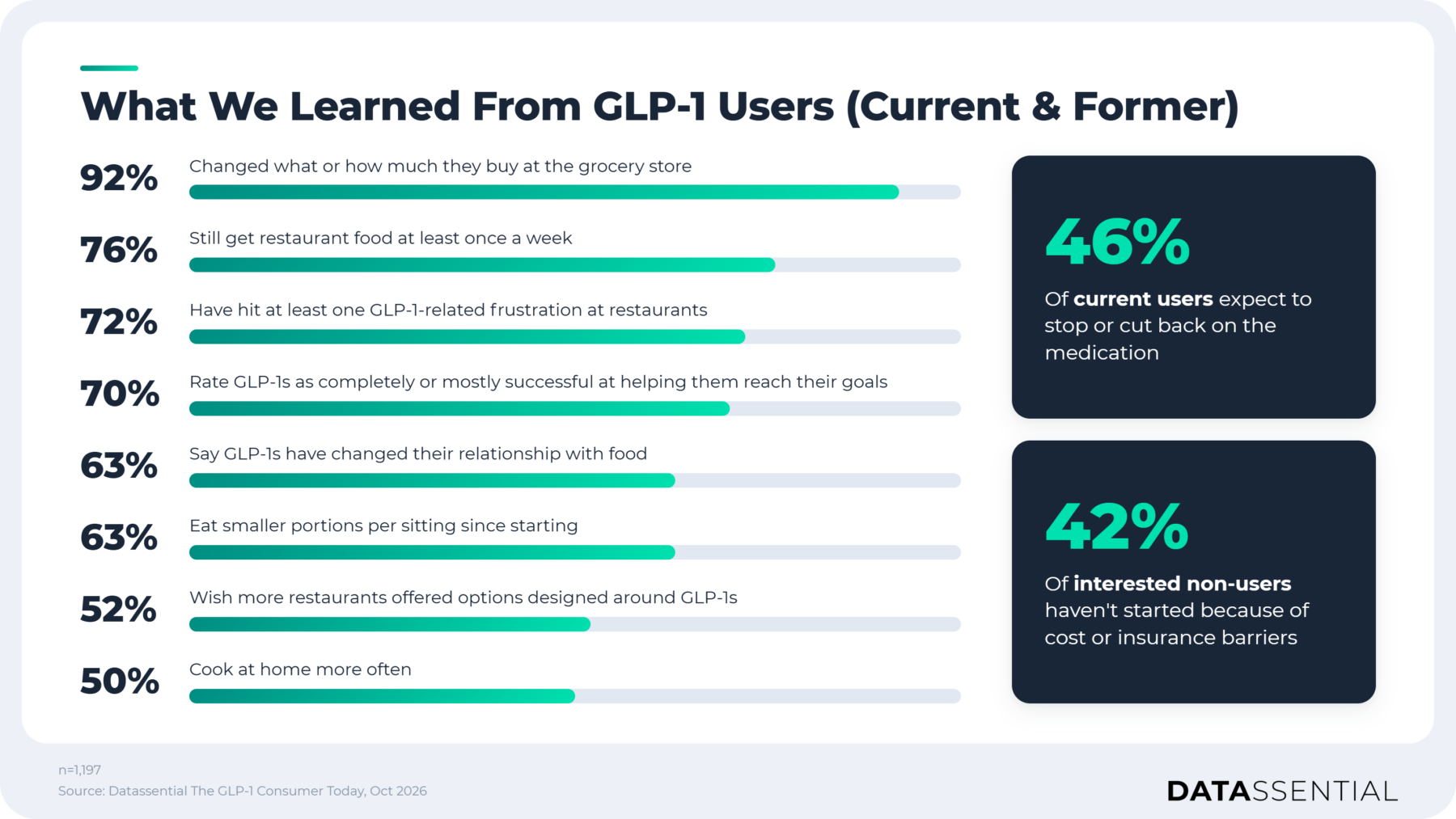
Seven in ten users classify GLP-1s as completely or mostly successful, and nearly two-thirds say the medication has changed how they think about food. Here are the ten stats that frame the rest of the story.
In the Grocery Aisle: Smaller Carts, Smarter Choices
Nearly all GLP-1 users (92%) have changed what or how much they buy. The biggest group (43%) simply buys less food overall, while another 32% buy the same amount but swap in different items. The shift is toward produce and protein: 44% buy more fresh fruits and vegetables, 37% buy more protein-rich foods, and 27% buy more fiber-rich foods. Meanwhile, 43% buy fewer sweets and sugary items, 31% buy more low-sugar or sugar-free products, and 30% read nutrition labels more carefully.
What ends up on the plate tells the same story. Among foods users eat more of, poultry shows a net increase of 35 points, followed by eggs (+26), plant-based proteins like beans and tofu (+24), and seafood (+18). On the decline side, sugary foods and beverages (net -58), fried foods (-55), and processed or ultra-processed foods (-53) fall the furthest. One signal for brands: users are more likely to eat more of natural protein and fiber sources than of packaged products marketed as high-protein (+13) or high-fiber (+10).
Snacking is changing too, a useful data point for anyone tracking healthy snacking trends. More than half of users (55%) snack between meals less often, and when they do, fresh fruit leads at 52%, followed by nuts or seeds (39%), high-protein snacks (36%), and cheese or dairy-based snacks (36%). Only 20% still reach for chips, and 17% for sweets or candy.
What users want from grocery: familiar, nutritious staples in smaller quantities, without giving up convenience or variety. Flexible package sizes, easy-to-portion ingredients, and quick preparation fit that brief.
At Restaurants: Still Showing Up, Still Underserved
Eating less has not meant eating out less, at least not entirely. Three in four users (76%) still get restaurant food at least once a week, and half do so three or more times a week. Weekly use is highest among Gen Z (89%) and Millennials (84%), compared with 61% of Boomers. Still, 45% dine in less often than before, and 52% order takeout, drive-thru, or delivery less often.
When they do go, users work around the menu rather than rebuild it. Four in ten skip dessert more often, 30% leave more food on the plate, 29% swap alcohol for water or a non-alcoholic drink, and 28% look for high-protein or nutritious dishes. Those workarounds don’t remove the friction. Seventy-two percent have experienced at least one GLP-1-related frustration at a restaurant, led by:
- Nausea or stomach discomfort triggered by certain foods (20%)
- Paying the same price no matter how little they eat (19%)
- Portions that feel wastefully large (17%)
- Too few smaller-portion or lighter options (16%)
- Trouble finding high-protein or nutritious dishes (16%)
- No nutrition information on the menu (15%)
The priorities behind those complaints are shifting. Since starting a GLP-1, more than half of users say food quality and freshness (54%) and menu variety (51%) matter more, with ingredient details (48%) and nutrition information (47%) close behind. Large portions are the one attribute moving the other way: 40% say they matter less now.
What users want from restaurants: more than half wish more restaurants offered options designed around GLP-1 users, meaning smaller portions at fair prices, protein-forward dishes, and transparent nutrition. The value equation is moving from how much food a guest gets to how much of it they can actually enjoy.
Beverages: Less Alcohol, Less Sugar, More Functional Sips
Drinks show some of the sharpest shifts in this cohort. Among users 21 and older, 39% drink alcohol less often than before starting a GLP-1. Among users who drink at all, more than half are drinking less. Net consumption declines are steepest for spirits (net -47), beer and cocktails (net -46 each), and wine (net -39). The pullback shows up in both channels: 20% buy fewer alcoholic beverages at the grocery store, and 29% order water or a non-alcoholic drink instead of alcohol at restaurants.
Non-alcoholic drinks are not an automatic winner, though. Seventeen percent of GLP-1 users buy fewer non-alcoholic beverages such as soda, juice, coffee, and energy drinks and report net declines in sugary foods and beverages and caffeinated foods and beverages. What fills the gap leans functional: 28% snack on protein or meal replacement shakes and smoothies and 25% snack on on sparkling, flavored, or electrolyte waters.
For beverage brands and operators: lead with benefits like low sugar, protein, and hydration rather than a GLP-1 callout, and treat low- and no-alcohol options as an open opportunity.
GLP-1-Friendly Labels: Clear Demand, Delicate Wording
The appetite for GLP-1-friendly foods is real and reaches well beyond current users. About 63% of users say they are likely to choose explicitly GLP-1-friendly items at restaurants or at retail, and 32% are very likely. Fewer than 10% rule them out. Among interested non-users, 67% would likely order a GLP-1-friendly menu item and 68% would likely buy one at the grocery store.
The label itself is more complicated. Two in five users (40%) seek out suitable foods but would rather not see the medication named on menus or packaging, and that preference is strongest among younger consumers: 58% of Gen Z and 49% of Millennials, versus 21% of Boomers. Only 17% of users say they have specifically bought foods with GLP-1-friendly labels or claims so far, and interest in those foods falls from 81% of Gen Z to about 40% of Boomers.
The takeaway for anyone following Gen Z food trends is that the benefits sell more reliably than the badge. Manageable portions, protein, fiber, and clear nutrition information appeal to this audience without putting a medical label on the plate. Explicit GLP-1 labeling may still earn its place, but it’s worth testing before committing.
Why the Opportunity Outlasts the Prescription
GLP-1 use is not a fixed audience. Current users are nearly split, with 44% planning to continue and 46% expecting to stop or cut back, and 56% of current users worry about keeping up their new eating habits if they stop.
Former users offer some reassurance. Only 18% say their habits mostly reverted. Another 39% went back to some old habits but kept many new ones, 29% kept most of their new habits, and 14% say their habits kept improving after stopping. Over half of former users (52%) plan to restart or are considering it.
Nearly two-thirds of interested non-users (64%) are considering starting within the next few months, though 42% say cost or insurance has held them back, while just 5% worry about stigma. The needs behind these nutrition trends, such as protein, nutrient-rich dining, and smaller portions, appear to persist regardless of where someone is in treatment. That makes current, former, and prospective users one overlapping audience for food and beverage brands and operators.
What This Means for You
For grocery and CPG brands: the strongest functional food trends in this cohort are protein, fiber, and low sugar, delivered in familiar formats. Offer smaller, easy-to-portion pack sizes, and let real-food credentials do the work, since users lean toward natural protein and fiber sources over packaged claims. Because 44% of users keep their usual shopping frequency, the bigger lever is what goes in the cart, not how often they shop.
For restaurant operators: value no longer equals volume. Smaller-portion and lighter options at fair prices, protein-forward dishes, easy modifications, and visible nutrition information speak directly to the top frustrations. Since 76% of users still eat out weekly, these guests are worth designing for.
For everyone: talk about benefits first and test GLP-1 callouts before leaning on them, and remember that age matters. Younger users dine out more, report more frustrations, and are more wary of the label, so there is no single GLP-1 consumer to design for.
The Bottom Line
GLP-1 users are not walking away from food. They are asking for more of what fits their new appetite: smaller portions, real protein and fiber, fewer sweets, and menus and packages that make the right choice easy. Because those needs persist across current, former, and prospective users, the opportunity doesn’t depend on any one person’s treatment decision.
The full GLP-1 Consumer Today report is available exclusively to Datassential customers. Request a demo of the Datassential platform to see how consumer preferences, menu data, and trend forecasting come together in one place.