 EN | English UK
 DE | Deutsch
 ES | Español
 FR | Français
 IT | Italiano
The European Bread Market: Why It Still Matters Strategically?
For food and drink manufacturers, distributors, and restaurant operators, bread may be one of the most familiar categories in the market, but familiarity should not be mistaken for simplicity.
According to Datassential’s latest Bread, Viennese Pastries, and Patisseries in Europe research, based on 6,000 consumers across France, the United Kingdom, Spain, Italy, and Germany, bread remains a fundamental part of everyday eating, with monthly penetration reaching 96% to 98% across all five markets. In other words, bread is not a niche, a trend, or a seasonal indulgence. It is a near-universal habit.
Everyday Relevance All-Day Long
Across Europe, consumers eat bread at breakfast, lunch, dinner, and snack time, both at home and away from home.
In Spain, Italy, and France, it goes beyond occasion: bread is structurally woven into the main meal itself. Weekly at-home lunch consumption sits at 76% in Spain, 79% in Italy, and 73% in France; at dinner, the figures are equally striking — 71%, 77%, and 75% respectively. This makes bread far more than a side item. It is a structural part of eating behavior.
For restaurants, cafés, QSRs, and grab-and-go operators, bread can serve many purposes: as a side, a base, a snack, a premium touch, and even a way to drive traffic. For manufacturers and distributors, it means the category has relevance across retail, foodservice, sandwich programs, breakfast formats, and meal solutions.
Bread Consumption By Country: Five Distinct European Markets
The real opportunity in bread comes from understanding how local preferences dictate this category. Europe may share a broad love of bread, but consumers in each market express it differently.
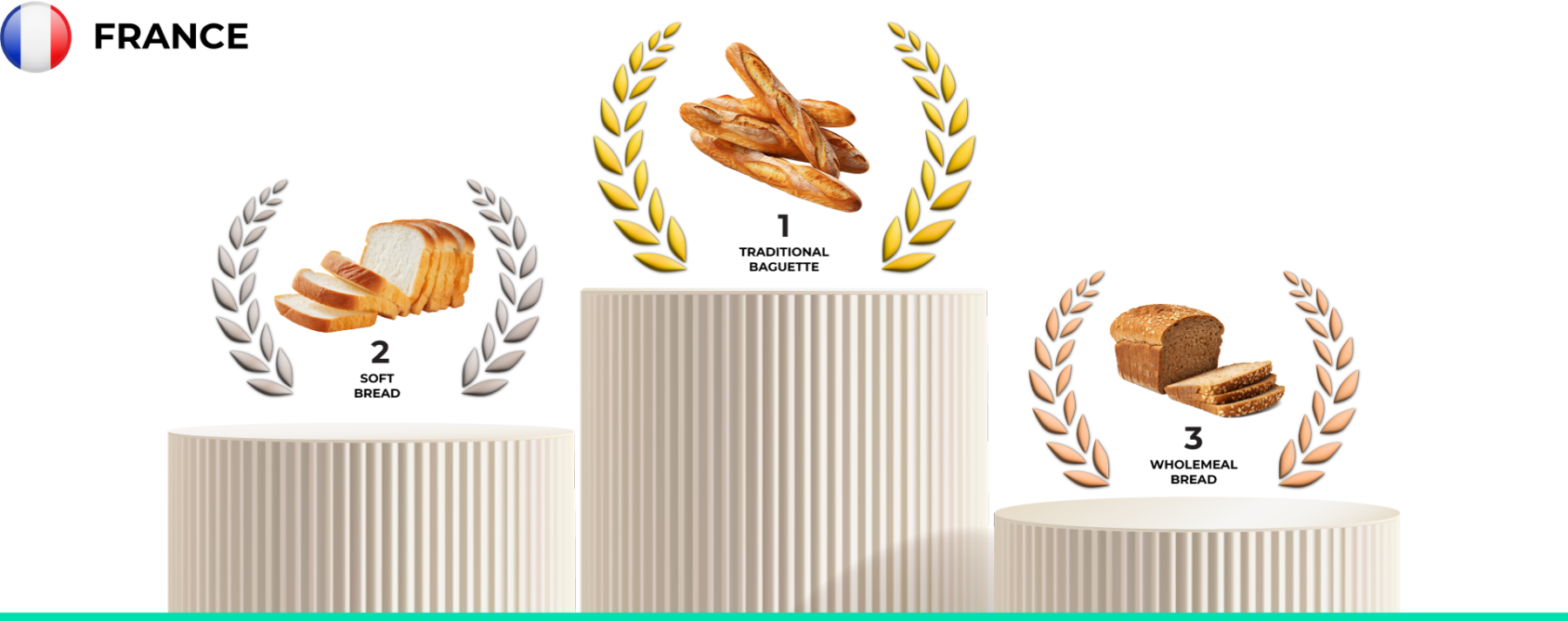
In France, the baguette still defines the category. The old-fashioned or traditional baguette is the most frequently purchased bread, bought at least monthly by 54% of consumers, followed by sandwich bread at 53%, and wholegrain bread at 49%. The French market therefore blends heritage and practicality: iconic long loaves still matter, but so do convenience and better-for-you formats.

The UK tells a different story. It is a market led by convenience, versatility, and packaged familiarity. Sliced white bread leads at 47% monthly consumption, with rolls or baps and bloomer bread both at 46%. Here, bread is less about artisan ritual and more about adaptable everyday use.
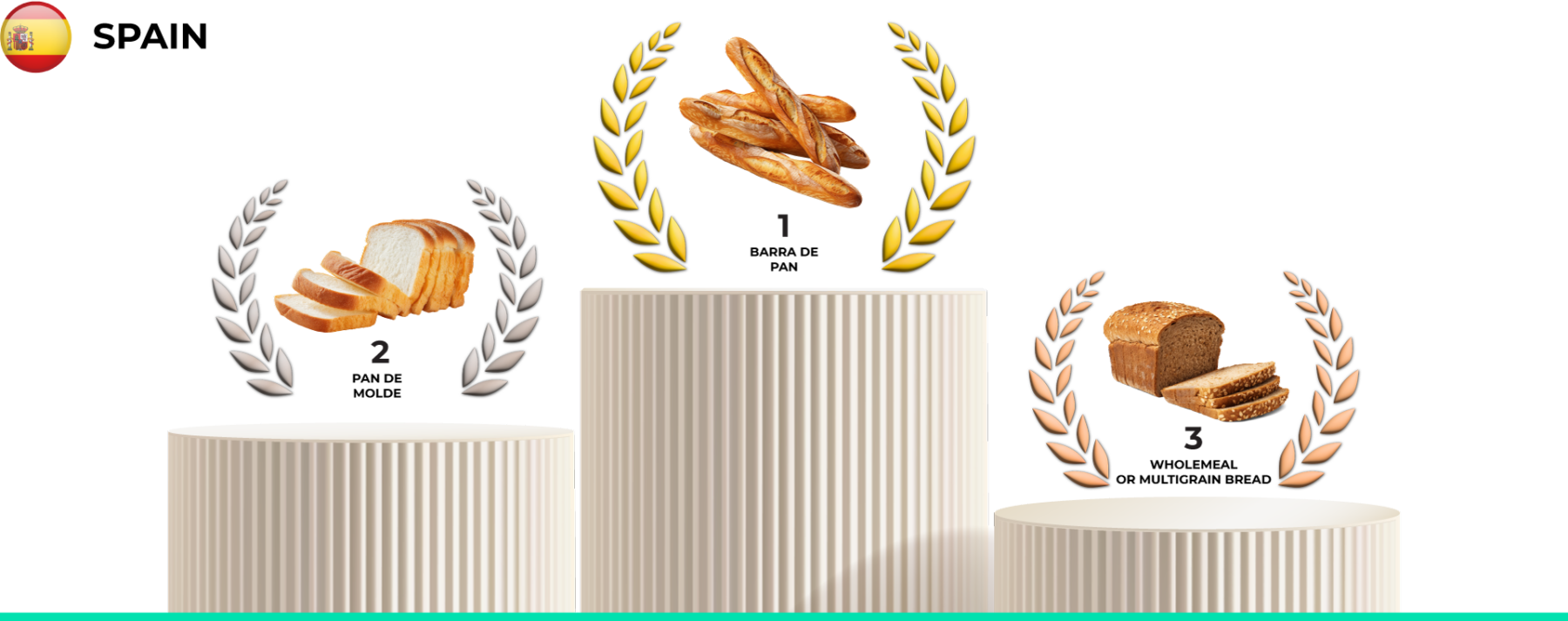
Spain remains strongly rooted in traditional staples, led by barra de pan at 68% monthly consumption and pan de molde at 60%.
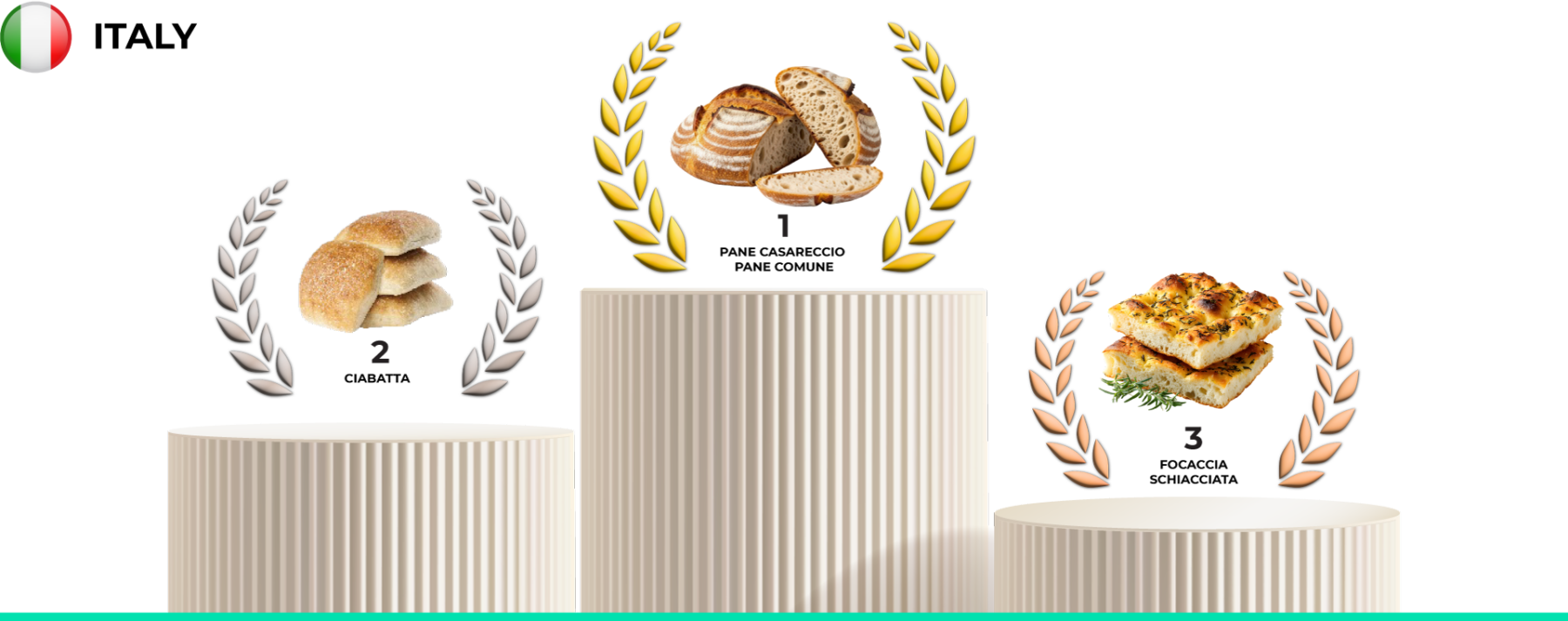
Italy shows a more balanced mix, with pane casareccio/pane comune, ciabatta, and focaccia/schiacciata all purchased by 44% of consumers in the last month.
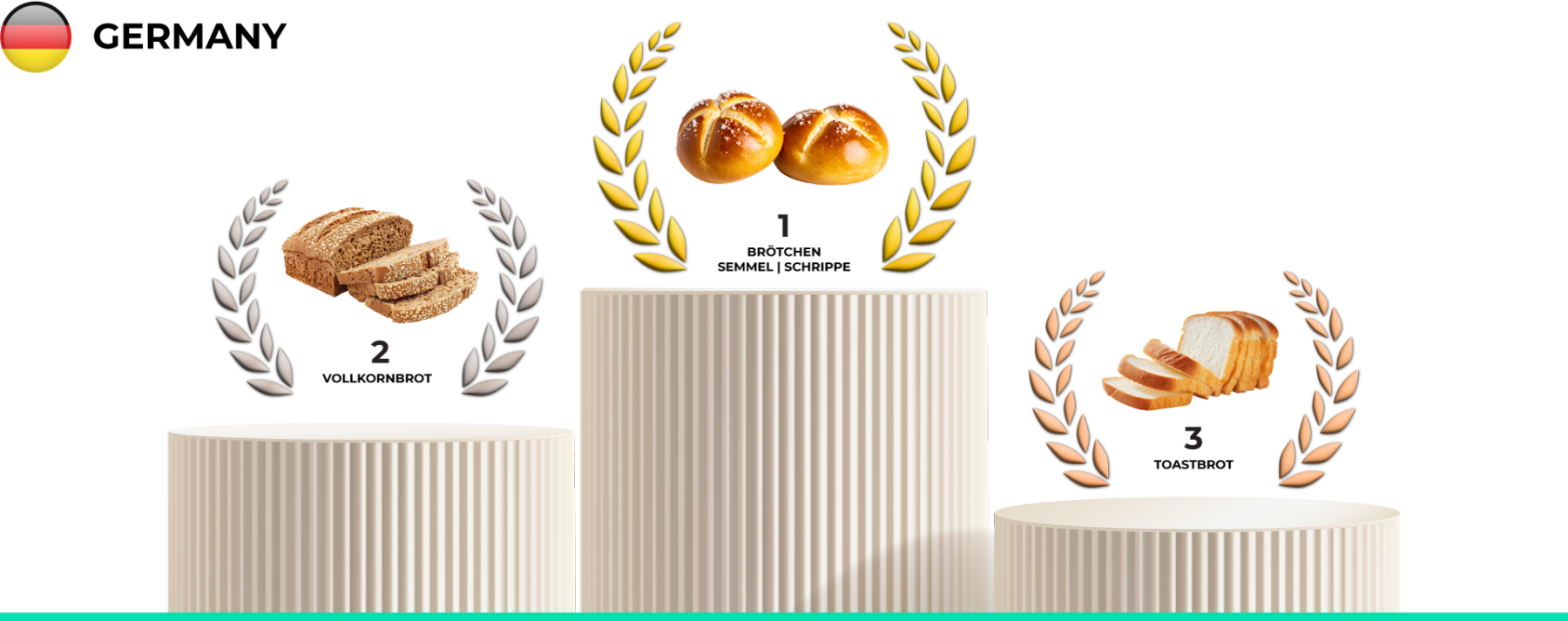
Germany stands apart with its strong preference for bread rolls and wholegrain breads, led by Brötchen/Semmel/Schrippe at 57% and Vollkornbrot at 54% monthly consumption.
For manufacturers, this suggests that a single European bread strategy is unlikely to fit every need. The most effective assortments will reflect local market preferences, formats, and use occasions.
Bread Market Size By Country: Volume Vs. Value Opportunities
Weekly purchase volumes reinforce bread’s importance. Consumers buy an average of 4.4 pieces of bread per week in Italy and 4.1 in Spain, compared with 3.8 in France, 2.5 in the UK, and 2.1 in Germany. Southern Europe remains the category’s volume engine, but that does not mean lower-volume markets are less attractive. Rather, they may be more open to innovation around convenience, health, premiumization, and occasion development.
This is where the category becomes especially compelling. Bread is not disappearing in lower-volume markets. It is being redefined.
Quality is the New Baseline
If there’s one message manufacturers, distributors, and operators should consider, it’s this: consumers don’t choose bread on price alone. For most of the markets, the most important buying criteria are taste and aroma, texture, freshness, and ingredient quality, all of which rank ahead of price/value for money. Taste and aroma are important to 86% to 88% of consumers, depending on the market, while freshness reaches up to 90% in Italy and 87% in France.
When consumers describe what “good bread” means to them, they talk first about bread that is freshly baked, made with simple and high-quality ingredients, and satisfying in texture and crust. In France and Germany, a crisp, golden crust is especially important; in Italy, high-quality ingredients stand out more strongly. This is a category where sensory quality is not a nice-to-have. It is the foundation of value.
That has major implications for innovation and positioning. The strongest products will not simply compete on cost. They will communicate freshness, naturalness, craftsmanship, and ingredient credibility in ways consumers can instantly understand.
Bread Still Triggers Emotion And Impulse
Despite being an everyday staple, bread remains highly emotional in how it is bought. One of the strongest purchase triggers across all five countries is the smell of hot bread just out of the oven, cited by approximately 40% to 50% of consumers as a purchase motivator depending on market. Visual appeal and visible presence in store also play a major role, especially in Spain and Italy.
For restaurants and foodservice operators, this is a helpful reminder that bread can spark appetite, encourage impulse purchases, and shape perceptions of quality before the first bite. For retailers and distributors, it also highlights the value of inviting displays, fresh-baked cues, and merchandising that makes bread feel warm, appealing, and abundant.
Inflation Has Changed Habits, But Not Bread’s Importance
Consumers clearly notice rising prices, and many are responding by buying less often or reducing quantities.
Importantly, price increases are the dominant signal across all markets — felt by 68% of consumers in France, 67% in Spain, 66% in Germany, 61% in Italy, and 52% in the UK. But the way inflation registers differs by market. In the UK, shrinkflation is a notably prominent concern, with 23% of consumers pointing to smaller sizes or portions — more than double the rate seen in France (11%) or Germany (10%). Lower perceived ingredient quality also indexes higher in the UK (9%) compared to other markets, suggesting British consumers are more attuned to product degradation as a cost-cutting signal.
Yet the category remains remarkably resilient. Most consumers say their bread consumption has remained stable over the past year, ranging from 60% to 68% depending on the country.
Even more importantly, bread still maintains a very strong image. In France, the UK, and Spain, 72% to 75% of consumers agree that bread is part of a balanced diet, while 60% to 75% see it as good value for money depending on the market.
Many are willing to trade up when the product earns it. Between 49% and 67% of consumers say they are willing to pay more for artisan bread, and 53% to 63% say they prefer high-fiber breads. This is a strong signal that “better bread” has room to grow.
What ‘Better Bread’ Looks Like Now
The future of bread in Europe is not about radical reinvention. It is about refinement. Consumers are looking for bread that delivers on pleasure and reassurance at the same time.
That means:
- Strong taste and aroma
- Visible freshness
- Simpler, more natural ingredients
- More fiber and wholegrain relevance where appropriate
- Credible artisanal or local cues
- Formats aligned to actual usage occasions
The wider study reinforces that local/artisanal and no artificial additives are among the most encouraging claims in bakery overall. Sustainability also matters, especially in France, Italy, and Germany, where consumers place strong importance on local and responsible ingredients, anti-waste practices, and sustainable packaging. But these benefits need to remain accessible. In responsible purchasing as in bread overall, affordable pricing remains a critical lever.
Why Bread Deserves A Bigger Strategic Role
For many businesses, bread is still treated as a supporting category: necessary, high-volume, but low-interest. That mindset is outdated.
Bread is one of the few categories that combines near-universal penetration, high consumption frequency, broad daypart relevance, and emotional connection. It has the power to elevate meal occasions, strengthen value perception, and communicate quality across both retail and foodservice. It can support indulgence, health, convenience, local sourcing, and sustainability, all within the same broad category.
For manufacturers, this means designing country-specific portfolios instead of generic European platforms. For distributors, it means aligning channel strategy to local shopping habits, whether that is artisan-led in France, convenience-heavy in Spain, supermarket-driven in the UK, or discount-influenced in Germany. For restaurants and foodservice operators, it means using bread more strategically as a signature, a check average driver, and a quality signal.
The Bottom Line
Bread remains one of Europe’s most dependable food categories, but simply being present is no longer always enough. To stand out, brands and operators increasingly need to offer bread that feels fresher, tastes better, looks more appealing, and communicates a clearer sense of quality, ingredients, and value.
In today’s market, bread is not “just bread.” It is daily comfort, local culture, sensory theatre, and a smart commercial opportunity all in one.
Interested in the full Bread, Viennese Pastries, and Patisseries in Europe report or in accessing Report Pro, Datassential’s insights library? Click here to request a demo or get more information.
And register for our upcoming webinar “From Bread to Patisserie,” part of our Europe in a Bite webinar series.