 EN | English UK
 DE | Deutsch
 ES | Español
 FR | Français
 IT | Italiano
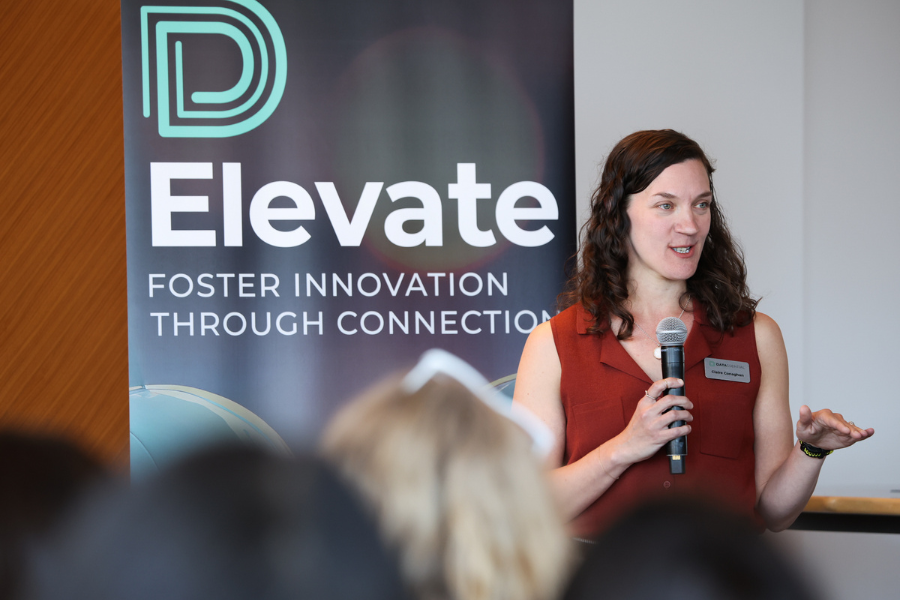
The 2026 Elevate Experience brought many of the leading minds across the food and beverage industry into the same room. The result was a concentrated look at the forces shaping foodservice right now, and a preview of where things are headed.
The third annual Elevate Experience delivered sessions that covered everything from macro-level economic pressures to the emotional psychology behind dining decisions. Here’s what was on the forefront of everyone’s mind.
The World Isn’t Getting Simpler, and Foodservice Feels It
Two sessions opened the event by setting the macro stage, and the picture they painted was one of compounding complexity.
Datassential SVP of Customer Strategy, Megan Lynberg, and Trendologist & Research and Insights Manager, Huy Do applied the STEEP framework (Society, Technology, Economy, Environment, and Politics) to decode the forces currently colliding in foodservice. Political instability, climate volatility, and shifting consumer psychology aren’t operating in isolation. They’re stacking. And together, they’re creating an operating environment where brands that plan for only one outcome will find themselves behind.
Macro Forces are Stacking
One key observation: the current period of disruption is actually driving consumers toward food and beverage as a source of control. When the world feels unpredictable, deciding where and what to eat becomes a meaningful act. That’s not a soft insight: it’s a commercial signal. Brands that position themselves as a dependable, trustworthy choice stand to benefit from the anxiety economy, even as that same anxiety complicates the path forward.
Pivoting has to be part of every operating model now, not just a contingency. Policy shifts, climate events, and fast-moving cultural change require brands to think in scenarios, not single forecasts.
The Economic Picture: Mixed, but Holding
Datassential economist Keenan Marchesi, took the conversation from macro forces to ground-level numbers in The Full Menu, a deep dive into the economic indicators every foodservice leader should be watching. The news is mixed. Consumer sentiment is worsening, but the restaurant-to-grocery price gap is narrowing, and it remains the number one traffic headwind for restaurant operators. Meanwhile, 74% of operators cited food costs as their top challenge, with reducing those costs named the primary operational goal.
But foodservice is holding. Spending momentum has continued despite the anxiety, propped up largely by a labor market that hasn’t broken. As long as employment holds, consumer spending follows.
A few other data points from the session stood out. GLP-1 research is producing a nuanced story: foodservice spending does dip in the first six months after adoption, but it normalizes. Grocery spending, however, stays down. For operators, that’s a longer-term tailwind worth tracking. And in a signal that major events still move the needle, Datassential estimates $2.1 billion in incremental U.S. foodservice spend tied to the 2026 FIFA World Cup, with restaurant and bar occasions capturing the largest share.
The through line across both sessions: uncertainty is the baseline condition. The question isn’t whether disruption will come; it’s whether your business is built to respond to it.
Why Consumers Eat What They Eat (It’s Not What You Think)
One of the event’s most distinctive sessions came from Eve Turow-Paul, founder of BITE (Building Impact Through Eaters) and author of Hungry, who presented new research developed in partnership with Datassential: an updated version of the original 2018 Hungry study, now reframed through the lens of 2026.
The core argument reframes how we think about food’s role in people’s lives. Historically, food sat at the base of Maslow’s hierarchy of needs: a physiological requirement, nothing more. Turow-Paul argues that today, food has migrated up the hierarchy. It doesn’t just sustain us. It helps people feel safe, connected, purposeful, and seen.
That shift matters enormously for anyone trying to understand consumer behavior.
The research identified three human needs driving today’s biggest food trends: control, community, and purpose. Consumers are anxious, particularly about healthcare, climate, and financial security.
Control:
Food has become one of the primary areas where they exercise agency. Fibermaxxing, ingredient transparency, GLP-1 adoption, restrictive diets, the demand for minimally processed foods. These aren’t just wellness trends. They’re expressions of a desire for control in an environment where most things feel out of the consumer’s control.
Community:
Community shows up in mukbangs, experiential dining, supper clubs, pop-ups, counter seating, and the whole social media apparatus around food. Meals are increasingly a social currency. The way food functions as identity: diet tribes, brand loyalty, culinary personalization. It reflects people’s hunger for belonging as much as nourishment.
Purpose:
Purpose explains the resurgence of hands-on food culture: fermentation, foraging, homesteading, cottagecore. People want to feel like their food choices mean something, to themselves, to their communities, and to the planet.
The practical implication for operators and manufacturers: brands that tap into only one of these needs are leaving something on the table. The most resonant food experiences, the ones that build loyalty rather than just trial, tend to fulfill more than one at a time.
Value Is More Complicated Than the Price Tag
What does “value” mean to a consumer in 2026? Nicole Valenti, Senior Director of Custom Insights at Datassential, spent a session pulling that word apart, and the findings push back on the assumption that value is primarily about low prices.
Consumers are doing math, but it’s not just arithmetic. Portion size, freshness, consistency, order accuracy, and service all factor into the value equation. A larger portion that allows consumers to spread one order into leftovers across multiple meals is seen as a win. A healthier or more elevated option can justify a higher price point. These calculations are happening constantly, across every occasion.
A few findings from the session deserve attention from operators and menu developers. First, value is non-negotiable at lunch and dinner. Consumers dining during off-peak dayparts are significantly less focused on price, which creates flexibility that most brands aren’t fully exploiting. Second, when costs force a trade-off, consumers prefer a modest price increase over a portion reduction. Keeping the experience intact matters more than keeping the price flat.
Loyalty mechanics are also shifting. Member-only deals generate a VIP feeling that goes beyond the discount itself; 70% of consumers say they feel more valued when they receive an offer others don’t. That emotional dimension of exclusivity is an underutilized tool.
The session’s core message: brands that define value only through price are competing on the thinnest possible margin. The operators gaining ground are the ones building a fuller value proposition: quality, consistency, experience, and community, wrapped around a reasonable price.
AI Is Moving Faster Than the Industry Is Planning For
Datassential Founder and Executive Chairman Jack Li delivered one of the event’s most forward-looking sessions, mapping what an AI-first world looks like for food, health, and daily life.
The pace of change is the main point. The shift from “should high school students learn to code?”, which was a genuine debate just a few years ago. A few years later, Nvidia’s CEO, Jensen Huang, was predicting that nobody would need to learn how to code; it would all be handled by AI. That compression of the timeline is the thing to internalize. The agentic era is not an approaching development. It’s here.
For food and beverage, the impact of AI will mirror its impact on every other sector of life: sweeping, structural, and arriving faster than most organizations are currently planning for. The more consequential question isn’t what AI can do for product development or operations today, but what the intelligence explosion means for how people eat, how they relate to food, and what role restaurants and food brands play when AI becomes the layer mediating daily decisions.
The session didn’t offer easy predictions, because the honest answer is that the outcomes depend on how AI development unfolds. What it did offer was a frame: the industry leaders who will handle this era best are the ones treating AI as a strategic priority now, not a tooling upgrade for later.
What C-Suite Leaders Are Actually Thinking About Today
The event closed with a panel of industry executives offering candid perspectives on the signals they’re watching and the decisions they’re wrestling with. A few themes emerged clearly.
Data Confidence
Data confidence is a real issue. AI delivers answers with certainty, and that certainty is convincing. But executives on the panel were clear-eyed about the gap between confident outputs and accurate ones. The human judgment layer, meaning the people who know the business, the market, and the context, isn’t optional. It’s the thing that separates a data-informed decision from a data-determined one. The takeaway: data can tell you what’s happening, but leadership determines what happens next.
Speed as a Competitive Advantage
Speed is now a competitive advantage in a way it hasn’t been before. The combination of available data and AI tooling has dramatically compressed the timeline from insight to action. But speed only helps if the organization is also willing to pivot when something isn’t working. Making the best decision possible at the time, and staying nimble when conditions change: that was the operating model executives kept returning to.
The Generational Divide on AI
One observation from the panel stood out as underexamined in most industry conversations: a potential generational divide on AI. While many business leaders are investing heavily in AI as the next defining platform, there are emerging signals that younger consumers view it with more skepticism than their predecessors showed toward recent technological breakthroughs, such as the internet or the smartphone. Whether that translates into generational backlash and what it means for AI-forward hospitality concepts remains an open question. But it’s one that executives said they are watching closely.
Guest Metrics Deserve More Attention
The panel also pointed to guest metrics as a category that deserves more C-suite attention. Google ratings, review quality, and experience scores are now filtering criteria, not just feedback loops. A certain threshold of guest satisfaction is table stakes for consideration among many consumers, before any other variable enters the equation.
The Bigger Picture
Across all the sessions, a consistent theme surfaced: the foodservice industry is operating in a genuinely complex moment, and complexity rewards preparation over reaction.
The brands and operators best positioned for the next few years share a few things. They’re watching macro signals across economics, culture, and technology, and building flexibility into their strategies. They understand that consumers are making decisions based on emotional needs as much as rational ones. They’ve moved past price as the primary lever for value. And they’re taking AI seriously as a structural shift, not a feature rollout.
The Elevate Experience also included a client spotlight session where food and beverage companies shared how Datassential data and insights shaped some of their recent commercial decisions across menu innovation, market expansion, and product validation. The takeaways from those conversations reinforced something that showed up across every session: the distance between insight and impact comes down to activation. The data is only as useful as the strategy built around it.
If you’re interested in joining the Elevate community when it meets next, learn more about the Elevate Experience here.