 EN | English UK
 DE | Deutsch
 ES | Español
 FR | Français
 IT | Italiano
What Is Hojicha?
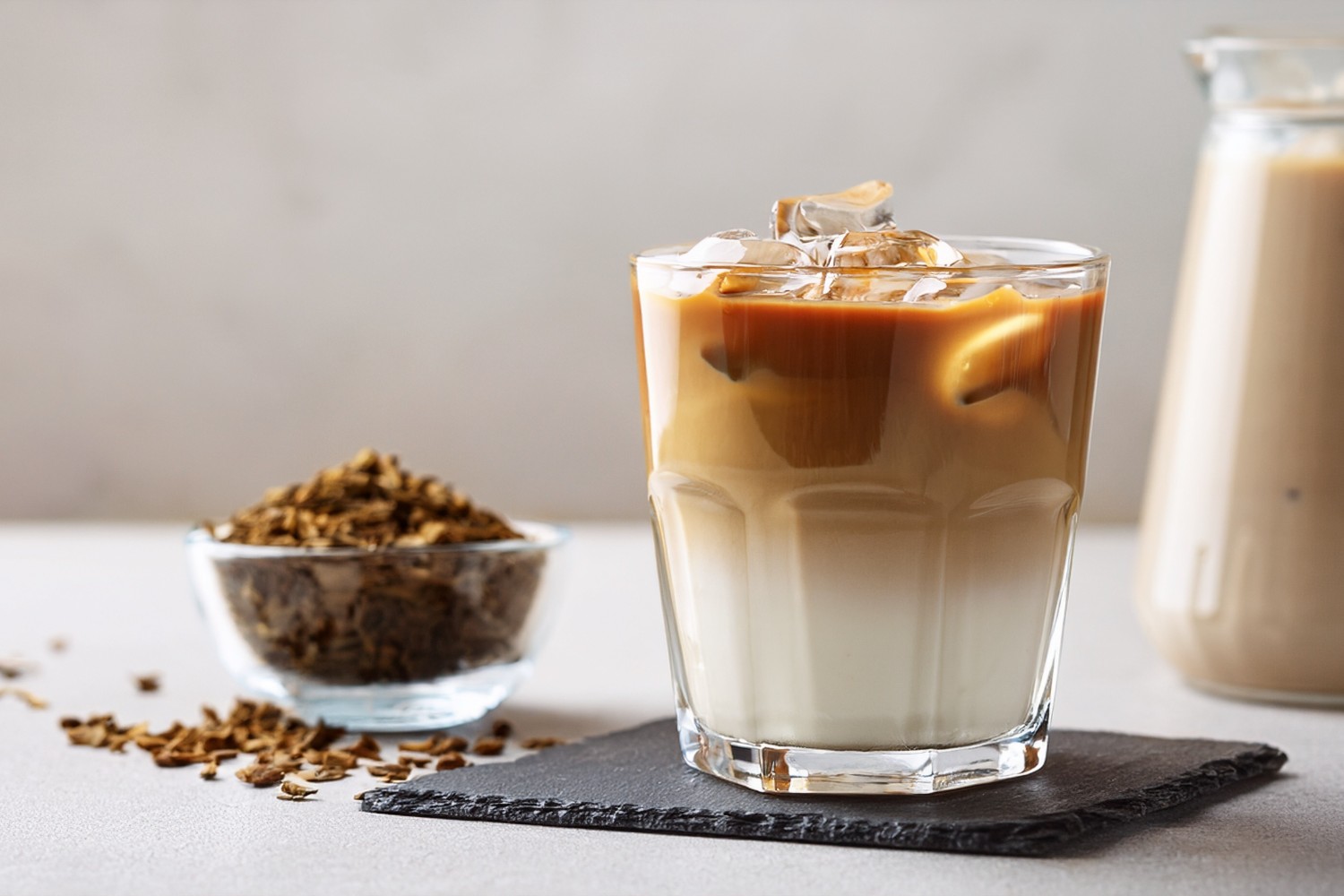
Hojicha (pronounced hoh-JEE-cha) is a Japanese green tea that’s roasted over charcoal or in a hot pan after harvesting, rather than steamed like matcha or sencha. The roasting process drives off much of the tea’s caffeine and bitterness while creating a toasty, nutty, faintly caramel-like flavor that reads as more approachable to first-time tea drinkers than matcha’s grassy intensity. Because it starts as green tea, hojicha shows up in the same formats as matcha: loose leaf, powder for whisking, and syrup for lattes and specialty drinks.
Why Hojicha Should Be on Your Radar
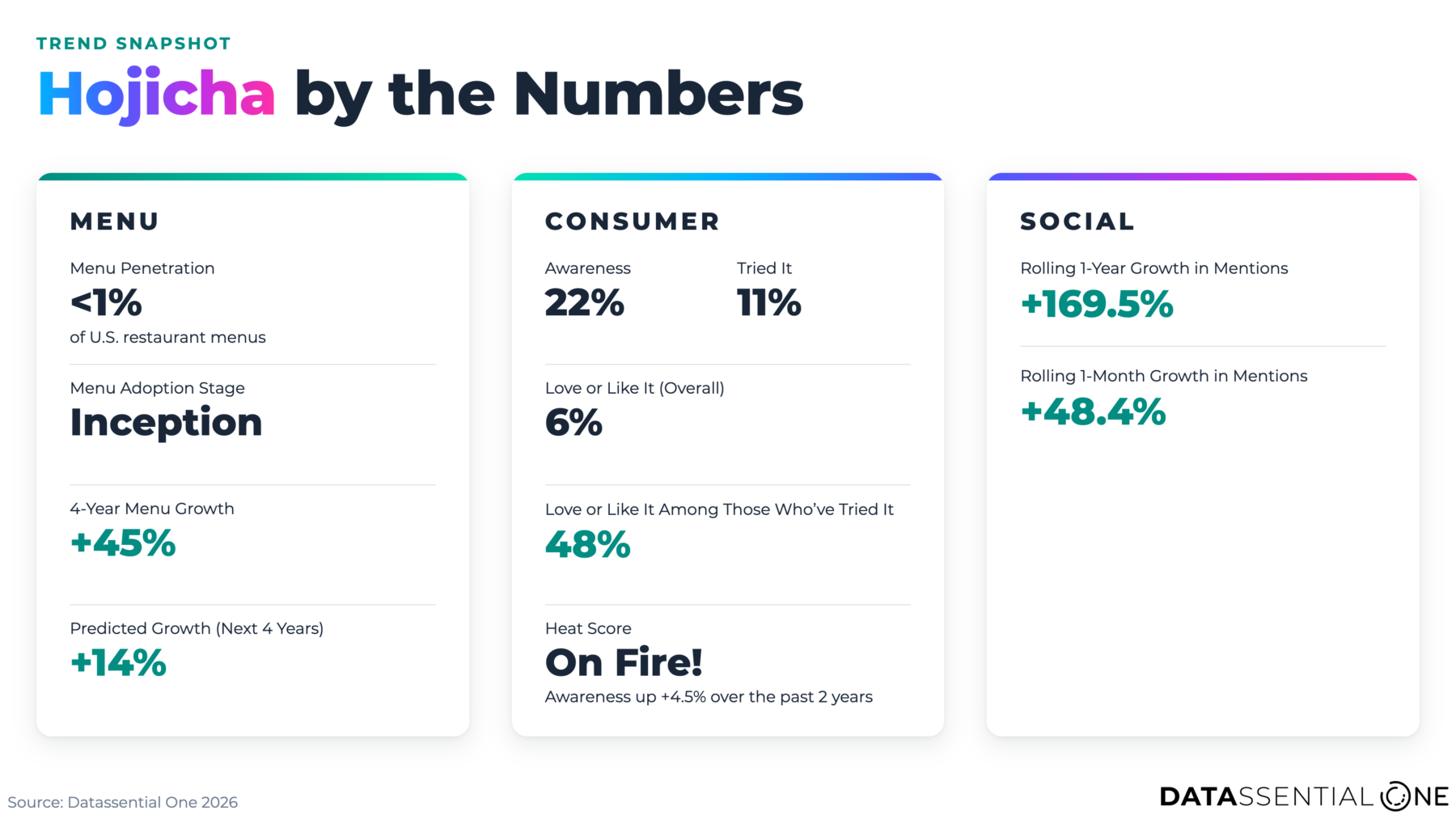
Hojicha is registering the kind of consumer and menu momentum that Datassential’s trend team watches closely. It’s still a niche pour, appearing on less than 1% of U.S. restaurant menus, but its trajectory looks like an early-stage trend rather than a passing moment: +45% menu growth over the past 4 years, an “On Fire!” heat score (our term for the ranking of trendiest items) according to Datassentials’ Consumer Preferences database, and a growing footprint at name-brand tea and coffee concepts.
So is hojicha the next matcha, or just matcha’s quieter cousin riding its coattails? Datassential’s menu, consumer, and report data all point in the same direction: like ube and hot honey, which evolved into menu mainstays, hojicha has its own unique qualities that give operators a reason to menu it beyond novelty.
When it comes to predicting and classifying trends, it is equally as important as demand to understand external influences that can either stop a trend in its tracks or supercharge it to the next stage. Ube’s versatility across menu categories, applications, and dayparts enabled its swift growth, while hot honey is a prime example of a classic ingredient finding new life late in its cycle. Supply chain availability and chain adoption are two other defining factors; ube really started to take off once Baskin-Robbins launched an ube ice cream in 2022. Not only are we seeing hojicha appear on chain menus, but other external factors are contributing to its growth:
- Matcha supply chain shortages are creating opportunity for hojicha as a viable alternative
- Consumers have had more time to become more interested in and familiar with roasted, toasty flavors
- Core demographics like Millennials are starting to look for items with lower caffeine.
Hojicha is benefiting from the awareness built by matcha. Both menu penetration and consumer awareness have steadily increased over the last four years. Its appeal skews younger, as 9% of Gen Z and Millennial consumers love or like it compared to 6% of average US consumers. Even more promising, once consumers try it, they are more likely to love or like it.
Hojicha by the Numbers
Once consumers try hojicha, their affinity for it climbs sharply, an early signal for operators weighing whether the flavor is worth menu space. Although hojicha is still in Inception, the earliest stage of the Menu Adoption Cycle, it shows promising growth across menus, social media, and among consumers.
Where Hojicha is Showing Up on Menus
When it comes to cuisine types, hojicha still skews towards Asian restaurants, with Japanese at the top of the list, followed by American, French, and Coffee & Bakery locations. On menus, hojicha shows up predominantly as tea but is also beginning to appear among cocktails and desserts.
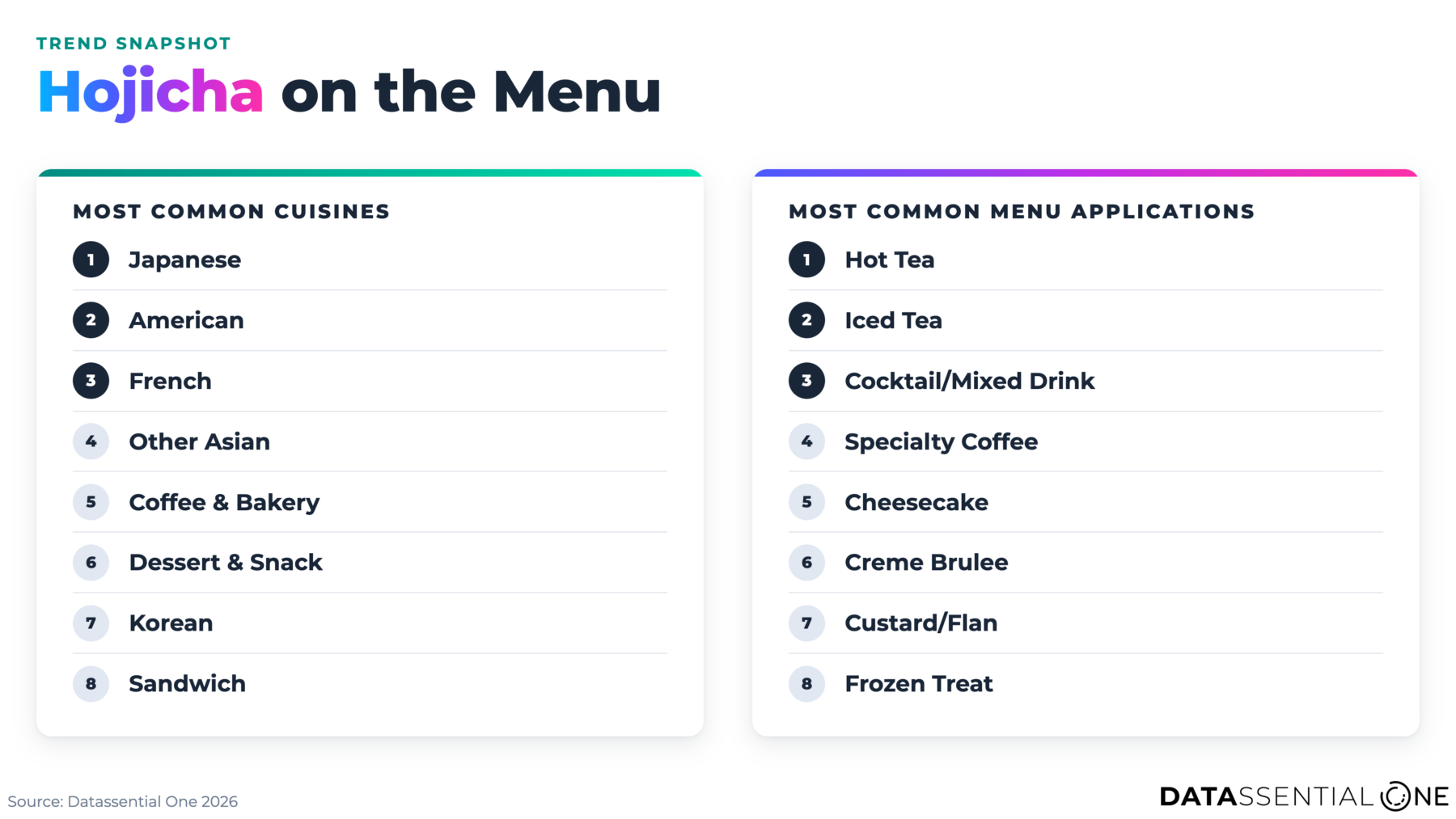
Hojicha at Restaurants
- The Coffee Bean & Tea Leaf: introduced an Iced Hojicha Latte, Iced Pumpkin Hojicha Latte, and Hojicha Ice Blended drink as part of its fall 2026 menu lineup.
- TOUS les JOURS: the French-Korean bakery-café chain debuted a Hot/Iced Hojicha Latte alongside its fall 2026 menu.
- Junbi: the tea-forward café concept offers both a Hojicha Latte and a Hojicha Latte With a Matcha Shot, giving customers an on-ramp between the two teas.
- Nicho’s Matcha Cafe in Seattle, Washington offers variations including a hojicha vanilla kinako cream, hojicha usucha, and Uji hojicha latte.
Hojicha vs. Matcha: Following a Familiar Curve
Hojicha’s current numbers echo where matcha stood in its own early days. According to Datassential’s 2020 Hojicha report, matcha grew from less than 1% of menus in 2016 to nearly 2.5% by 2020, more than 225% growth over 4 years, before becoming a mainstream café staple. Matcha now sits at 7% menu penetration with 60% growth over the past 4 years and a predicted 43% growth over the next 4, according to current Datassential Menu Trends data.
Hojicha is earlier in that same curve, but it’s tracking a similar shape: modest penetration, accelerating growth, and a heat score that signals rising consumer interest ahead of the menu data. Its lower-caffeine profile also gives it a distinct lane next to matcha, positioning it as a tea consumers can reach for later in the day without worrying about sleep.
Who’s Driving Hojicha Demand
Awareness of hojicha isn’t evenly distributed. Datassential Consumer Preferences data shows vegan and vegetarian consumers report the highest awareness, at 40%, followed by Asian consumers at 39% and consumers in the West region at 31%. Millennials (30%) and Gen Z (30%) also register above-average familiarity, suggesting hojicha’s early adopters mirror the same wellness-minded, globally curious consumers who drove ube and matcha before it.
Is Hojicha a Trend or a Fad?
Datassential’s Trend or Fad? Know the Difference Before Your Competitors Do report uses hojicha as a live example of its trend-versus-fad framework: the report notes hojicha earned 30% consumer interest in trying it in 2024, and by 2026 its awareness is rated “On Fire!” in Consumer Preferences. Combine that with its upward trend on menus and social media, and you have a combination of signals all moving in the same direction at once — exactly the pattern the report’s framework flags as evidence of a genuine trend rather than a short-lived fad.
As Datassential has noted in its broader trend-forecasting research, a food or beverage with growing menu presence alongside rising consumer and social awareness gets validated across all three data sources at the same time, and hojicha is a clear example of that alignment taking shape in real time.
What Comes Next For Hojicha
If hojicha follows a matcha-like trajectory, its next phase of growth should move beyond straight tea service and into the same beverage-innovation lane that carried ube and hot honey to mainstream menus:
- More lattes, cold foams, and matcha-hojicha hybrid drinks at coffee and tea concepts
- Expansion into desserts, soft serve, and baked goods
- Continued adoption at growing chains, following early movers like The Coffee Bean & Tea Leaf, Tous les Jours, and Junbi
- Possible crossover into retail and packaged tea and snack products as awareness climbs past its current 22%
The Bottom Line
Hojicha isn’t a menu staple yet, but its underlying signals line up with the same pattern Datassential has tracked for other breakout flavors: strong growth off a small base, a rising heat score, and consumer awareness led by exactly the demographics that tend to drive food trends into the mainstream. For operators watching what comes after matcha, hojicha is worth testing now, while it’s still early enough to feel differentiated.
Want to see where hojicha, and the flavors coming after it, rank in your own category? Request a demo of the Datassential platform to track menu adoption, consumer sentiment, and trend forecasts in one place.